Note
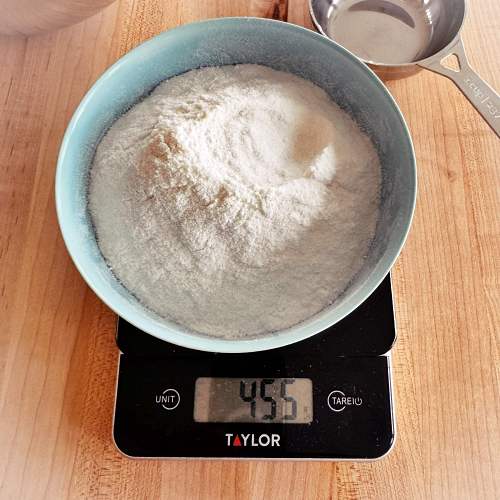
Yield: ~13 cups (1,845g)
Servings: 50 servings at ¼ cup (36.5g) each
Nutrition information is approximate and based on ¼ cup serving size.
Gluten-Free Flours
When it comes to baking gluten-free, the type of flour you use can significantly impact the texture and flavor of your final product. Here are some important tips regarding gluten-free flours.
1. Homemade Flour Blend
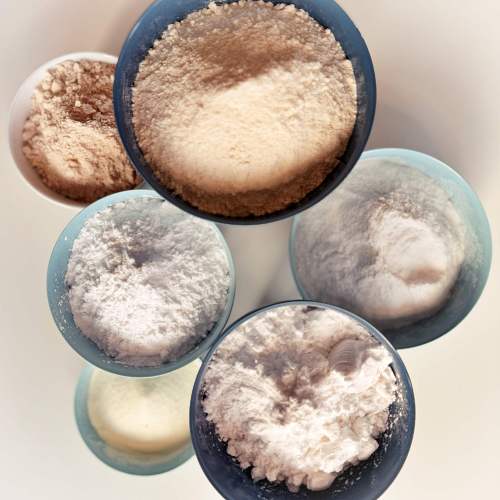
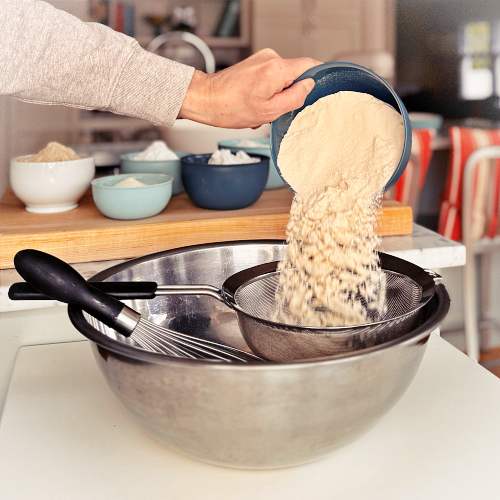
This blend weighs approximately 140 grams per cup. This blend includes a mix of gluten-free flours such as white and brown rice flour, potato starch, tapioca starch, sorghum and milk powder, providing a balanced texture and flavor for baking.
2. Store-Bought Gluten-Free Flours
If you prefer to use a store-bought gluten-free flour blend, it's crucial to check the packaging for the weight per cup, as this can vary between brands. Each manufacturer may have a different formulation, which affects the density and weight of their flour.
Here are several that are available from Amazon:
King Arthur Measure for Measure Gluten-Free Flour
Bob’s Red Mill Gluten Free 1 to 1 Baking Flour
Cup4Cup Gluten Free Multipurpose Flour
None of these flours contain xanthan gum. So if your recipe calls for xanthan gum, omit the extra xanthan if using one of these blends. All of the manufacturers promote these products as a one-to-one replacement.
3. Measuring for Accuracy
For the most accurate results, I highly recommend using a digital food scale to measure your gluten-free flour. Measuring by weight ensures that you have the correct amount, leading to more consistent and successful baking outcomes. This method eliminates the variability that can come from measuring by volume, especially with gluten-free flours, which can be compacted or aerated differently.
About Xanthan Gum
Xanthan gum replaces the structure that gluten normally provides. It helps doughs hold together, trap air, and bake with better shape and texture. But more is not better. Too much xanthan creates gummy, rubbery, or dense textures.
My Rule of Thumb:
½ teaspoon xanthan gum per 2 cups of gluten-free flour.
This works reliably for many cookies, cakes, and quick breads.
When to Adjust:
- Cookies: Stick with ½ tsp per 2 cups — keeps them tender without chewiness
- Cakes: Increase slightly to ½–¾ tsp per 2 cups — adds structure without making the crumb elastic
- Quick Breads & Muffins: Use ¾ tsp per 2 cups — helps with lift and moisture
- Yeast Breads & Pizza Dough: Use 1 tsp per 2 cups — provides the elasticity ye
Keywords:
gluten-free flour blend, homemade gluten-free flour, all-purpose gluten-free flour, gluten-free flour recipe, DIY gluten-free flour, best gluten-free flour blend, gluten-free baking flour, gluten-free flour for cookies, gluten-free flour for cakes, gluten-free flour for pies, gluten-free pie crust flour, gluten-free flour for galettes, ATK gluten-free flour, how to make gluten-free flour blend, homemade gluten-free flour blend recipe, gluten-free flour blend without xanthan gum, best homemade gluten-free flour, cheaper gluten-free flour alternative, gluten-free flour blend vs store-bought, King Arthur gluten-free flour alternative, Bob's Red Mill gluten-free flour substitute, Cup4Cup alternative, homemade vs store-bought gluten-free flour, gluten-free flour that works, reliable gluten-free flour blend, gluten-free flour that isn't gummy, gluten-free flour blend for flaky crust, consistent gluten-free baking flour, rice flour blend gluten-free, potato starch gluten-free flour, tapioca flour blend, sorghum flour gluten-free, gluten-free flour with milk powder, cheap gluten-free flour, affordable gluten-free flour blend, budget gluten-free baking, save money gluten-free flour, xanthan gum in gluten-free flour, how much xanthan gum for gluten-free baking, gluten-free flour blend ratios, weight vs volume gluten-free flour, gluten-free flour measurements, dairy-free gluten-free flour, gluten-free flour substitutions, gluten-free flour storage